Sophisticated Front-End Management for Efficient Solar-Energy Capture
By Bill Schweber, Mouser Electronics
Summary
To realize the potential of solar energy as a power source, the front-end interface between the cells and the
energy-extraction circuitry must take into account the unique characteristics of these cells; this can be done
via different algorithms and a variety of hardware/software implementations.
Introduction
Solar energy is a viable source of seemingly "free" energy, but transforming those impinging photons into
extractable energy requires careful planning, advanced electronics, and sophisticated battery charge/discharge
management. Solar power is being used as a power source across a wide range of applications, and these fall into
three broad categories:
- In energy harvesting for data logging and IoT, with power levels in the milliwatt range; output is
low-voltage DC;
- As primary, backup, or supplemental power source for homes or remote installations, often transportable,
with power levels in the hundreds of watts to kilowatts and output as line-voltage AC;
- For power-generation systems as part of the grid, fixed in place, power levels in hundreds and thousands of
kW; output is AC at thousands of volts.
A representative solar installation with wireless link requires numerous sub-functions, Figure 1, although
harvesting applications will omit many of the user-oriented blocks such as a display, of course. From a
high-level perspective, the power subsystem looks to be only a small part of the design, but in practice it is
not: it includes a front end which interfaces to the solar cell and captures the energy from the cell; a
power-management function which directs this energy to the storage element (battery or supercapacitor), and a
power-load management block which controls the power being extracted from the storage element. The system
captures energy (joules) as it is available, but releases it as power (watts) to meet the demands of the load.
[Power is the rate of energy use, needed to operate the load; but this power was previously captured as energy
(the time integral of power).]
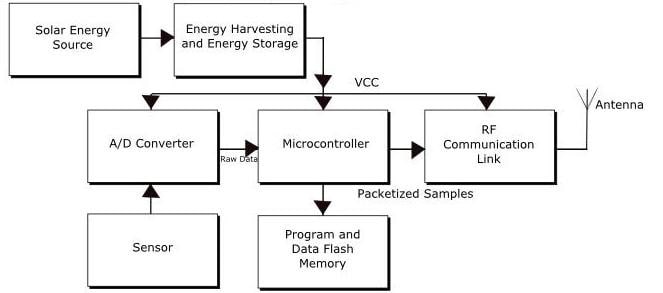
Figure 1: A complete solar-powered system, in this case
for IoT, is comprised of many functional blocks; for backup or standby power, blocks such as the
sensor and the RF link are not needed. (Source: Mouser)
As a reality, it's important to understand roughly how much power is available for extraction from solar source.
The mean solar radiation reaching the upper level of the Earth's atmosphere is around 1 kW/m2, or 0.1 W/cm2.
Only a fraction of this radiation reaches the ground even on a clear day, due to atmospheric absorption, and
solar cells are only about 15-20% efficient, so a good estimate is that available energy coming out of the cell
to be harvested is about 10 mW/cm2. Then factor in the losses in capture, storage, and output
conversion, and you can see that the amount of energy that can be obtained per square centimeter of solar cell
is fairly low—and that doesn’t include the unavoidable factors of darkness, cloudiness, reduced seasonal
radiation, and longitude of the siting on the Earth's surface.
Looking at this low available power makes it clear that minimizing losses throughout the solar-power system is
critical, especially in mW-range harvesting applications (but at least you don’t have to worry about I2R
losses there!) This optimization is most challenging at the front end, where the feeble power output of the
solar cell must be extracted and captured, as any losses or inefficiencies there can't be "made good" later;
that impinging solar energy is lost forever.
Efficiency Begins with Power-Point Tracking
Unlike most conventional energy (power) sources which are relatively well-behaved as current or voltage sources
with fixed parameters such as internal resistance, solar cells have unusual characteristics which must be
understood in order to capture as much of their output as possible. The designer's objective is to obtain
maximum power from the solar cell, regardless of its output voltage and current, both of which will change as
operating conditions change.
Under a given set of operating conditions, there is a unique "operating point" called the maximum power point
(MPP), where the cell provides maximum power (V × I) output. To extract the power, the load the cell sees –which
is the resistance of the connected circuit –must be matched to the characteristic resistance of the cell.
This matching situation is similar to the need to match any power source to a load to achieve maximum power
transfer, such as between a power amplifier's output impedance and the load antenna, or from an antenna to the
RF front end. In most such cases, the source and load impedance parameters are relatively constant, so the
matching can be done as a fixed circuit (some applications, especially in high-performance RF, do take into
account that some parameters do vary with temperature changes due to self-heating and ambient conditions).
However, the operating conditions of the solar cell are never constant, and shift repeatedly due to changes in
illumination, cell temperature, cell age, and other factors. As a result, the solar-based system must
dynamically change its loading on the cell for maximum efficiency, called maximum power point tracking (MPPT). Effective MPPT implementation begins with the
conventional graphs of source current-voltage and power-voltage relationships, with resistive load line and
maximum-power line, Figure 2a and Figure 2b.
Figure 2a: The a) current-voltage and b) power-voltage curves for
a photovoltaic array are complex; placing the load line and managing the maximum power point are key to
maximum efficiency (from Newcastle University, Power Electronics, Drives and Machines Research Group)
MPPT can be accomplished in several ways: In the "perturb and observe" technique, the front-end circuit's
impedance is "dithered" while the output of the cell is monitored; if it increases, keep going in that
direction, with sweeping though a range to see where the output is maximum. This is a standard approach
for
finding maximum/minimum in many optimization problems. Other techniques include manipulation of the
cell's
transconductance, by using a swept current or voltage drive to determine the internal parameters of the
cell.
Each method has tradeoffs, such as potential for excessive oscillation or "hunting" while seeking the
MPP, or
sub-optimum performance when trying to react to relatively rapid changes in the MPP.
Choices in Implementing MPPT
Regardless of the MPPT algorithm selected, the actual implementation can be accomplished in hardware via
a
dedicated IC, or in firmware (software) as part of the system microcontroller's programming. While the
latter
choice offers the most flexibility and the ability to fine-tune or even change the MPPT algorithm, it
can become
a system burden and so require a higher-speed, more power-hungry processor compared to a fixed-function
IC. As
with nearly all engineering decisions, there are tradeoffs in the decision as well as thresholds where
major
cost or power increments are crossed.
For small harvesting systems, a single MPPT implementation via a dedicated IC is usually the most cost
effective
and efficient; for multi-cell arrays spread over a larger area, even just a few square meters, it may be
necessary to provide separate MPPT for each cell subsection, as individual cells and zones may have
different
characteristics. Choosing among a front-end IC with dedicated MPPT, a harvesting-subsystem IC with
embedded
MPPT, and a processor with firmware-based MPPT depends on the size of the solar array, the power levels,
and the
flexibility needed (or perhaps not wanted at all).
At the other end of the complexity and flexibility spectrum is a fully programmable controller, such as
the TMDSHVMPPTKIT high-voltage, isolated solar MPPT
developer's kit from Texas Instruments. This complete evaluation-board package, Figure 4, targets
high-power systems with 200-300 VDC input and up to 500 W capability. It is based on the Piccolo F28035 processor in the C2000 family, and a
two-phase
interleaved boost stage for maximum power point tracking, along with a half-bridge resonant LLC
isolation stage;
both are digitally controlled from a single MCU. Designers can select MPPT by either
incremental-conductance or
perturb-and-observe algorithms, allowing them to test the two options and associated effectiveness in
their
application.
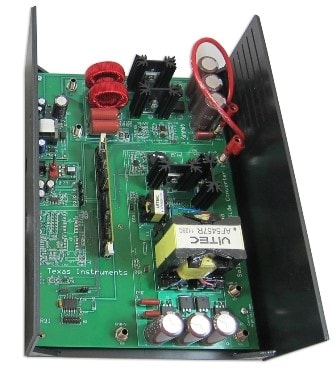
Figure 3: For a fully programmable solution, the
TMDSHVMPPTKIT from Texas Instruments is a high-voltage, isolated solar developer's kit with available
MPPT algorithms, based on the Piccolo F28035 processor; it can support supplies in the 500 W range.
It also includes USB-connected JTAG emulation, which eliminates the need for external hardware, and a
quick start
graphical user interface. All hardware and software is fully documented, and provided as "open source"
for
design use. The evaluation board complements the TMSHV1PHINVKIT from TI; together, they provide a
complete
DC-to-AC solar-powered inverter system.
An intermediate-size MPPT approach uses a device such the PIC16F1503
microcontroller from Microchip Technology. This IC is one of a series of enhanced core devices
which
includes peripherals such as an NCO (numerically controlled oscillator), CWG (complementary wave
generator) or
CLC (configurable logic cell). Microchip provides details including MPPT flow charts and associated code
modules
in their application notes [References 1 (AN1467) and 2 (AN1521)];
both can
be used with the PIC device while the flow charts alone can be used as a guide for any processor
programming
effort.
The attraction of solar power as an apparently free and never-depleted source for circuits ranging
from small
IoT class to large backup and even primary power is strong, with good reason. However, the power
available
to be extracted is fairly small, at best, so any design must focus on efficiency at the front end,
such as
MPPT issues, to make such an approach both economically sensible and technically feasible. Whether
designers
choose dedicated front-end ICs or fully programmable, processor-based designs depends on the solar
array
size, physical layout, desired modularity, and cost, of course.
Image sources:
References:
- AN1467, "High-Power
CC/CV Battery Charger Using an Inverse SEPIC (Zeta) Topology", Microchip Technology
- AN1521,
"Practical Guide to Implementing Solar Panel MPPT Algorithms", Microchip
Technology
- High Voltage Isolated Solar MPPT
Developers Kit, Texas Instruments
- TIDU404, Digitally Controlled HV Solar MPPT DC-DC Converter, Texas Instruments
- Ultra Low Power Meets Energy Harvesting – White Paper, Texas Instruments
- C2000™ Solar
Inverter
Development Kits, Texas Instruments
- Power Management IC
Development Tools High Vltg Isolated Solar MPPT Dev Kit, Mouser Electronics
- Solar Energy Harvesting,
Mouser
Electronics
- Low Cost MPPT Algorithms for PV Application: PV Pumping Case Study, Newcastle
University, Power Electronics, Drives and Machines Research Group
 Bill Schweber is an electronics
engineer who has written three textbooks on electronic communications systems, as well as hundreds of
technical articles, opinion columns, and product features. In past roles, he worked as a technical web-site
manager for multiple topic-specific sites for EE Times, as well as both the Executive Editor and Analog
Editor at EDN.
Bill Schweber is an electronics
engineer who has written three textbooks on electronic communications systems, as well as hundreds of
technical articles, opinion columns, and product features. In past roles, he worked as a technical web-site
manager for multiple topic-specific sites for EE Times, as well as both the Executive Editor and Analog
Editor at EDN.
At Analog Devices, Inc. (a leading vendor of analog and mixed-signal ICs), Bill was in
marketing communications (public relations); as a result, he has been on both sides of the technical PR
function, presenting company products, stories, and messages to the media and also as the recipient of
these.
Prior to the MarCom role at Analog, Bill was associate editor of their respected technical
journal, and also worked in their product marketing and applications engineering groups. Before those roles,
Bill was at Instron Corp., doing hands-on analog- and power-circuit design and systems integration for
materials-testing machine controls.
He has an MSEE (Univ. of Mass) and BSEE (Columbia Univ.), is a
Registered Professional Engineer, and holds an Advanced Class amateur radio license. Bill has also planned,
written, and presented on-line courses on a variety of engineering topics, including MOSFET basics, ADC
selection, and driving LEDs.